Loading article...
Trusted news agencies tracing tendencies of democratisation and autocratisation globally

Trusted news agencies tracing tendencies of democratisation and autocratisation globally
Loading article...
Thailand has elected a new parliament. The conservative ruling party has a surprisingly clear lead in the vote count, but it may take some time before official results are announced. The Thai people also voted on the process of developing a new constitution – with a clear result.
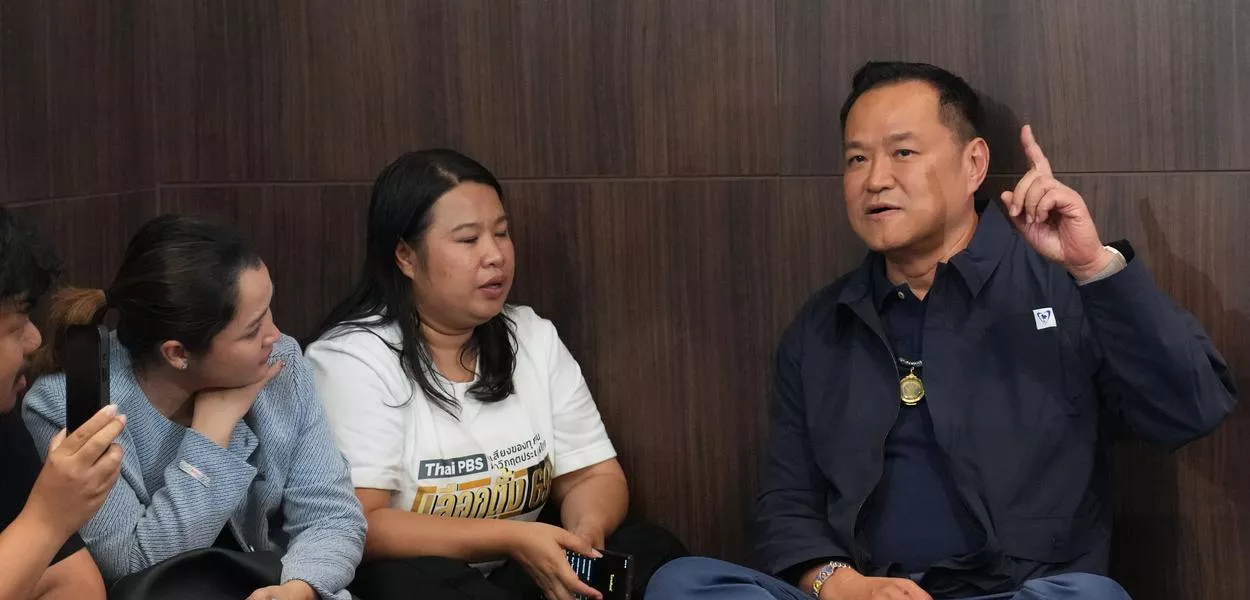
Bangkok (dpa/AP) – Thailand's conservative ruling Bhumjaithai (Thai Pride) Party is unexpectedly well ahead in the country's parliamentary election with around 80% of votes counted. Prime Minister Anutin Charnvirakul's party is set to secure 194 seats in the 500-member House of Representatives, figures from the national election commission showed.
The reform-oriented People's Party (PP), long considered the favourite, only secured about 116 seats. The PP has already conceded defeat. It had announced that it would go into opposition if it did not win the election.
In third place was the populist Pheu Thai (For Thais) Party, representing the political machine of former Prime Minister Thaksin Shinawatra. It trailed behind with 76 seats and has its strongholds mainly in rural areas. It’s widely believed that Pheu Thai will accept if asked to join a coalition government led by Bhumjaithai.
The counting process was repeatedly delayed, with results slowly released hours after the polling stations closed. If the result is confirmed, difficult coalition negotiations are likely to ensue, as no party would have an absolute majority.
In the most recent election in 2023, conservative political forces prevented the PP's predecessor party - the Move Forward Party - from coming to power despite its election victory. Move Forward was even banned by the Constitutional Court in 2023.
The South-East Asian kingdom has long been marked by significant political instability. Anutin was the third prime minister in two years and called the snap election in December while Thailand was involved in an armed border dispute with neighbouring Cambodia. It was the second outbreak of violence along the roughly 800-kilometre border in a few months, partly stemming from a long-standing unresolved boundary line. A fragile ceasefire has been in place since late December.
Along with the parliamentary election, the 53 million eligible voters also voted on whether a new constitution should be initiated. According to preliminary results, a large majority approved the reform. The vote wasn't on a proposed draft, but rather to decide whether to authorize parliament to begin a formal drafting process, which would require many further steps before coming to fruition. Pro-democracy groups view a new charter as a critical step toward reducing the influence of unelected institutions such as the military and judiciary, while conservatives warn that it could cause instability.
Official confirmation of all results could take several weeks.
The 500-member House comprises 400 lawmakers directly elected based on constituencies, while 100 others are chosen from “party list” nominees, who gain seats according to each party’s proportional share of the vote on a separate ballot indicating party preference. The battle for support from 53 million registered voters came against a backdrop of slow economic growth and heightened nationalist sentiment. While more than 50 parties contested the polls, only three — the People’s Party, Bhumjaithai, and Pheu Thai — had the nationwide organization and popularity to gain a winning mandate.
The leader of the People's Party, Natthaphong Ruengpanyawut, acknowledged that his party wouldn't come in first, and said it would respect the results. Its strongest performance was in the capital Bangkok, where it swept all 33 constituencies, according to the preliminary totals.
“We respect the parliamentary system, that we have to allow the winner to form the government first, and for now, we don’t think we are going to form a government in competition with Bhumjaithai,” he said, an apparent reference to any attempt to propose an alternative coalition when the House votes.
He also said his party would not support Bhumjaithai's candidate for prime minister.
Bhumjaithai's Anutin thanked voters for their support and vowed his party will work hard for Thai people. “At this moment, our people have given us more than what we expected this morning. So we owe our voters a fortune and we will only repay them by working at our utmost to bring all the good things to them and our country,” he said.
Bhumjaithai is seen as the main defender and preferred choice of the royalist-military establishment. The party benefited from an electoral strategy employing old-style patronage politics and a machine skilled at grassroots organizing in the vote-rich northeast.