Loading article...
Trusted news agencies tracing tendencies of democratisation and autocratisation globally

Trusted news agencies tracing tendencies of democratisation and autocratisation globally
Loading article...
The “Cockroach Movement” in India is a remarkable example of how media and its consumption are going through a transformation. The trend also shows just how quickly political communication is changing.
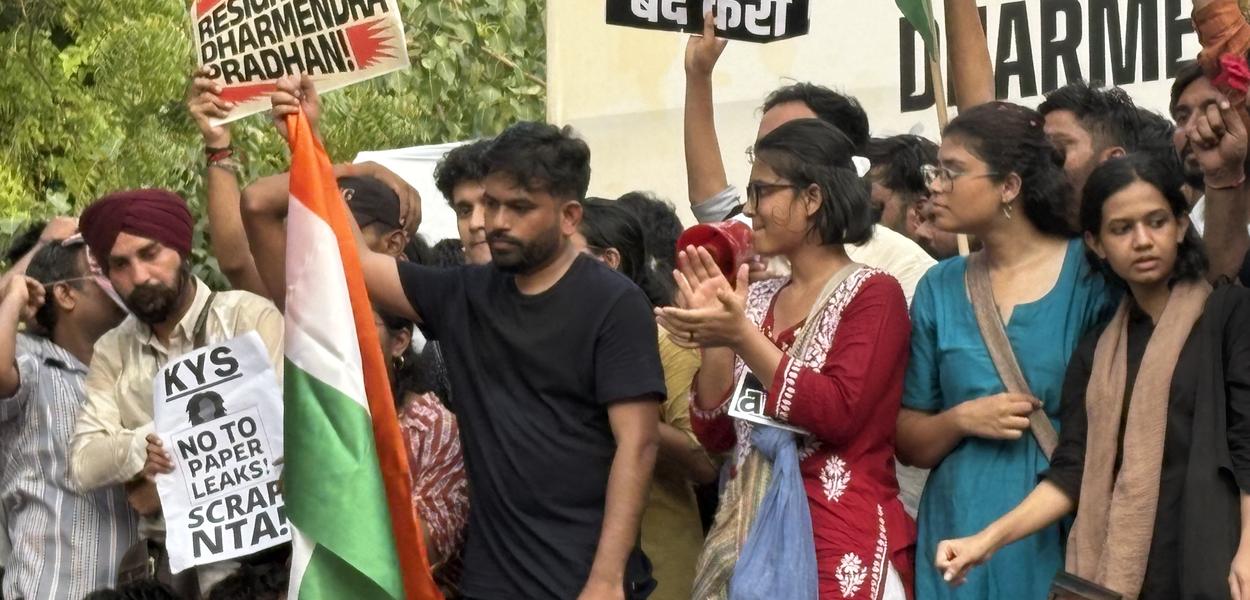
New Delhi (DNA) - The “Cockroach Movement” took the Indian government by surprise, and within a few weeks, what began as a satirical online campaign grew into one of the largest extra-parliamentary protest movements of recent years.
Millions of people followed it on social media, and prominent activists and opposition politicians jumped on board. What began as mockery online eventually spilled out onto the streets of New Delhi.
From the very outset, social media was its most important tool. On X and Instagram, the Cockroach Janta Party (CJP) found its followers, shared memes and videos, and organized protests. To this day, there is no party headquarters.
“They were entirely dependent for their mobilization on social media, on X and Instagram, and, and I'm sure WhatsApp also must have played a role there,” said Indian journalist and author Sukumar Murlidharan. The “mainstream media,” particularly TV stations, were initially hostile toward the CJP, he said.
The CJP was founded in May by Boston-based communications strategist Abhijeet Dipke. The catalyst was a derogatory remark by a chief justice who allegedly compared unemployed youths to “cockroaches.” The reaction was swift. Within a few days, the CJP gained more than 21 million followers on Instagram.
At first, the protest remained online: memes, videos and sarcastic comments dominated. But soon, mockery was no longer enough. Supporters took to the streets in New Delhi and other major cities. Their main demand was the resignation of Education Minister Dharmendra Pradhan. He was held responsible for a scandal in the education system and eventually resigned.
But the protest soon targeted more than just one minister. It also revealed the deep mistrust many young Indians feel toward parts of the mainstream media.
“All media houses owned by Ambani and Adani shall have their licences cancelled to make way for truly independent media. Bank accounts of Godi media anchors shall be investigated", demanded the Internet Party, referring to the influential business leaders Mukesh Ambani and Gautam Adani.
“Godi media”—literally meaning something like “lapdog media”—is a play on Prime Minister Narendra Modi’s last name. The term refers to segments of the mainstream media that critics accuse of being too close to the government and no longer fulfilling their role as an independent press.
However, one must be cautious when discussing India’s media. The country has one of the largest and most diverse media markets in the world. What an English-speaking Indian reads or watches on television can differ significantly from the news consumed by a Hindi, Bengali, or Tamil speaker, according to journalists in New Delhi.
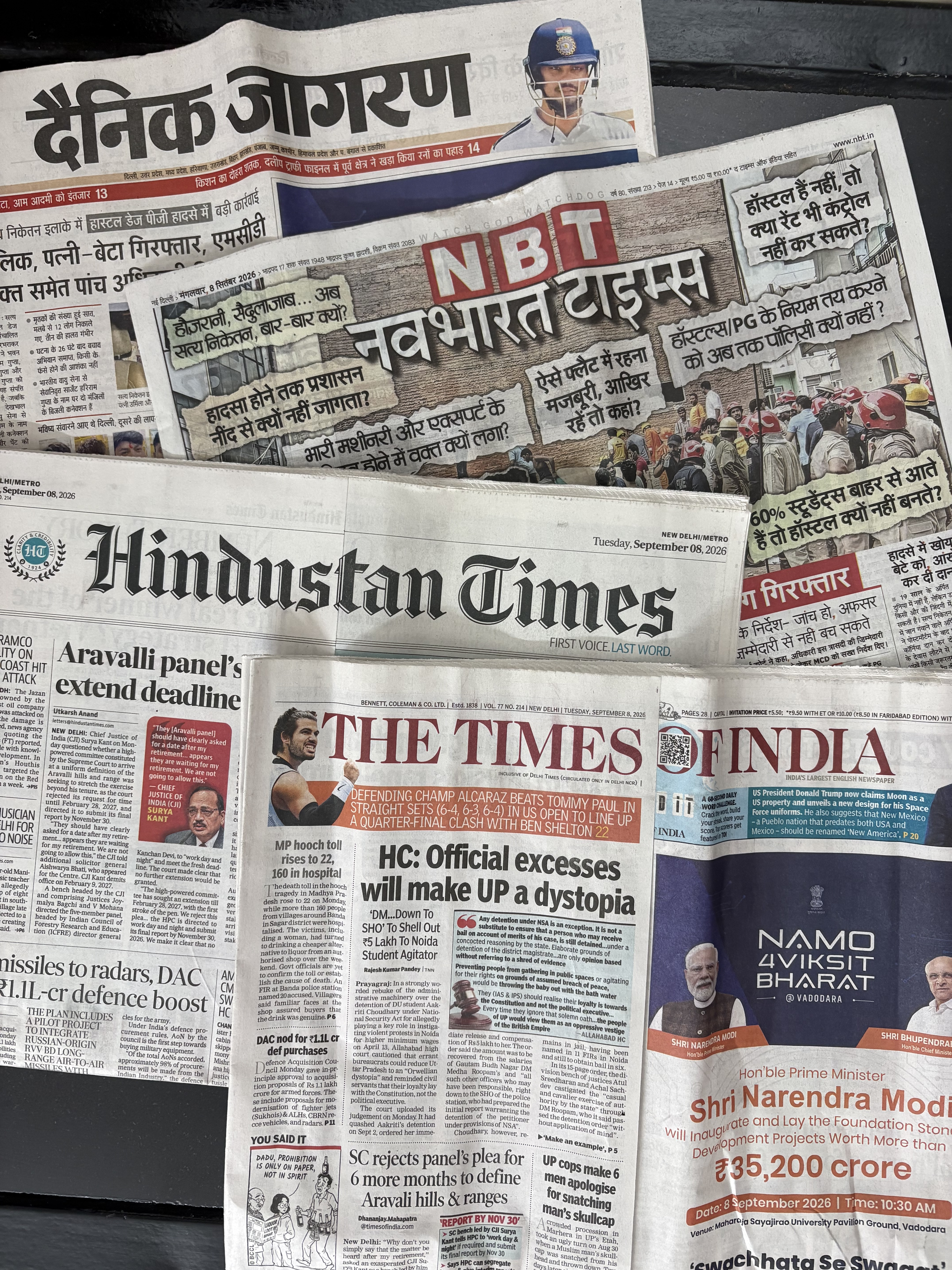
According to Reporters Without Borders (RSF), there are nearly 900 private television stations in India, about half of which focus on news. The public broadcaster Doordarshan broadcasts in 23 languages. In addition, there are some 140,000 publications in more than 20 languages, including about 20,000 daily newspapers. Their combined circulation exceeds 390 million copies.
This vast traditional media system is not simply being displaced by digitalization. Rather, it is expanding to include a new dimension.
"We don’t see a kind of a clean break either from newspapers to online or from linear broadcasting to online. Unlike in many European countries, what is happening in India is digital expansion rather than digital migration,” said media expert Vibodh Parthasarathi of Jamia Milia University in Delhi.
So it seems people are not simply giving up on television and newspapers. They are using YouTube, news portals, Instagram, and other social networks as well. Especially in small towns and rural areas, the proliferation of affordable smartphones and mobile data has dramatically changed access to the Internet.
The launch of the affordable 4G service Reliance Jio in September 2016 provided a major boost. According to “The India Forum,” the number of Internet users rose by 65 percent to 500 million within two years, by the end of 2018.
Social media has since become central to news consumption as well. According to the Reuters Institute’s “Digital News Report 2026,” 58 percent of Indians get their news from YouTube, compared to 44 percent who prefer traditional television.
This shift is particularly pronounced among younger people. However, the survey is not representative, as it primarily surveyed English-speaking online news users.
Digitalization has not resolved an old problem: Who owns the media? Reporters Without Borders points to the growing influence of large corporate groups and, among other examples, the Adani Group’s acquisition of the news channel NDTV in late 2022. Political ties, concentrated ownership, and dependence on government advertising are said to limit editorial independence.
In the latest RSF press freedom ranking, India ranks 157th out of 180 countries—six places lower than the previous year. The government rejects international criticism and claims that India is a vibrant democracy.
For Parthasarathi, however, the issue of press freedom is more complicated than international rankings suggest. The pressure on journalists does not come exclusively from the government. Economic power and the concentration of ownership also play a decisive role.
This is particularly evident in television, but also in newspapers. Politically affiliated media can represent different interests depending on the region and changes in government. Freedom of the press must therefore also be assessed based on the extent to which ownership and economic power are concentrated in the media sector.
"If there is a higher concentration of media ownership—regardless of the type of content being disseminated—one could argue, and studies elsewhere have shown, that this poses a risk to democracy“, Parthasarathi says.
At the same time, many Indians are losing trust in the traditional media system. Social networks offer new perspectives and provide access to a wide range of sources. However, they are also a gateway for disinformation and misinformation.
Television continues to have an enormous reach because of its low cost. Yet it is precisely there that trust has declined particularly sharply. The combination of broad reach, low costs, and growing mistrust is therefore particularly significant for society, Parthasarathi says.
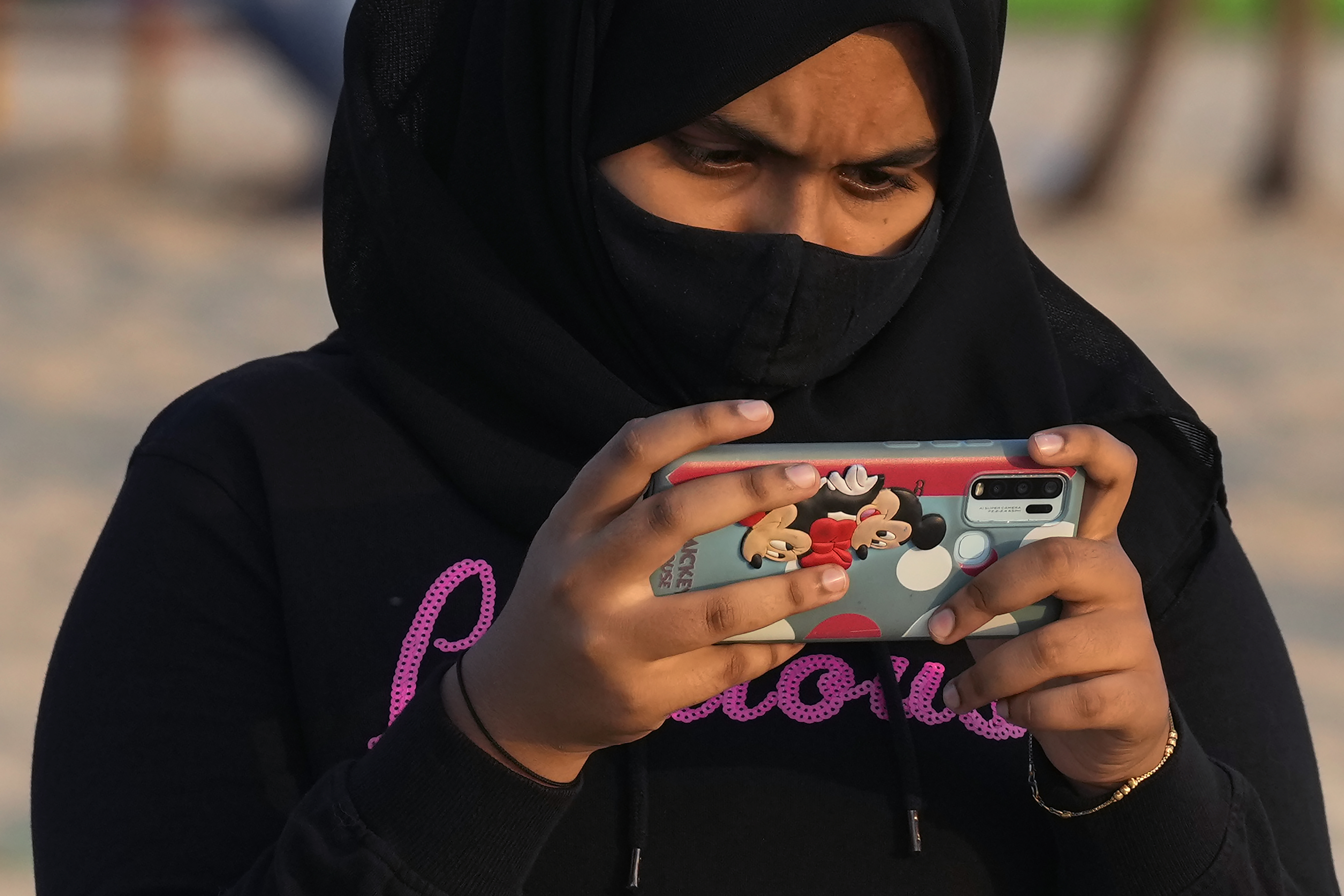
Among the younger generation, attention is increasingly shifting to the internet. For many, online news and social media are more appealing than print newspapers. Murlidharan believes print journalism in particular is facing an existential crisis. “I think print media, just like in other countries, is going through a crisis of profitability and identity,” he says. No one knows what the future holds for them.
The “Cockroach Movement” is a remarkable example of this. It shows how quickly political communication is changing in India: A derogatory term becomes the hallmark of a movement, memes turn into demonstrations, and millions of clicks generate political pressure.
Dirk Godder, dpa