Loading article...
Trusted news agencies tracing tendencies of democratisation and autocratisation globally

Trusted news agencies tracing tendencies of democratisation and autocratisation globally
Loading article...
After 16 years of Viktor Orbán’s media machine, Hungary’s journalists are discovering what freedom feels like—and how difficult it can be to use. As propaganda fades, independent newsrooms face a new challenge: reinventing themselves before another system takes shape.
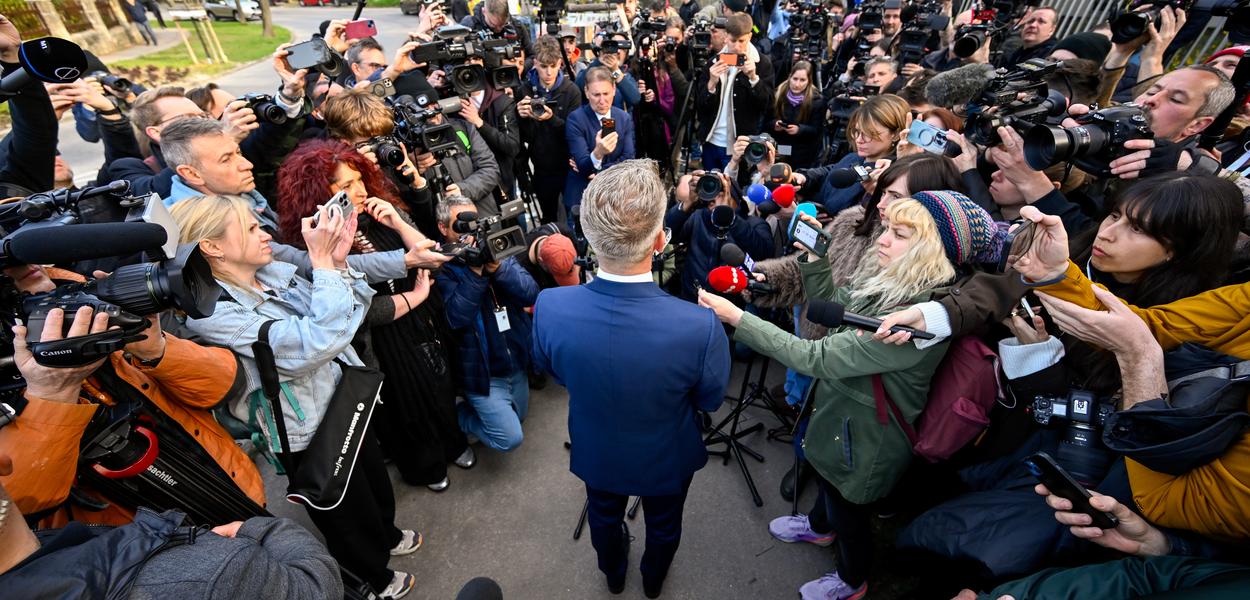
Budapest (DNA) – After the parliamentary election on April 12, Hungarians woke up, as they put it, "in a different country." Almost overnight, the government's relentless propaganda – which many had found unbearable – disappeared from the streets.
Before the election, countless posters had shown Viktor Orbán, the defeated right-wing populist, smirking alongside Péter Magyar, his eventual challenger and election victor. Magyar was depicted as a puppet whose strings were being pulled by European Commission President Ursula von der Leyen and Ukrainian President Volodymyr Zelensky.
The Orbán government had controlled virtually all radio stations – both public and private. After April 12, the appalling and constantly repeated spots disappeared, in which a deep, resonant voice warned listeners that Hungarian husbands and fathers would have to go to war in Ukraine unless Orbán remained in power.
Many people experienced this as a psychological burden. They saw Orbán's defeat as a liberation. In the cities and many parts of the country, Hungarians greeted one another with smiles on their faces – a sight that had not been seen for a long time.
Orbán had governed the Central European EU and NATO member state continuously since 2010, for 16 years. Political scientists described his rule as relying on "soft" authoritarian methods. Under his government, no one was imprisoned for their political views. Even demonstrations that he had banned but which went ahead anyway, such as the Budapest Pride march in July 2025, which attracted more than 200,000 participants, were not forcibly broken up.
His rule was based on political dominance, the distribution of state resources among his own economic clientele, from whom he expected unconditional loyalty, and extensive control over mass-circulation media.
The media system under Orbán was based on public television and radio whose management positions were filled with political commissars and which relentlessly disseminated Orbán's propaganda – in tone and style quite comparable to the state broadcasters of the former East Germany.
Orbán brought most of the influential private media outlets into the hands of oligarchs dependent on him. They too disseminated propaganda, and they did not need to generate profits. Orbán centralized the allocation of advertising contracts in the hands of Antal Rogan, the head of his cabinet office. State-owned and state-affiliated companies were, in practice, allowed to advertise only in media outlets close to Orbán.
Most private companies did not dare place advertisements in independent media. They were given to understand that they might otherwise face trouble with the tax authorities, labour inspectorate, or similar agencies.
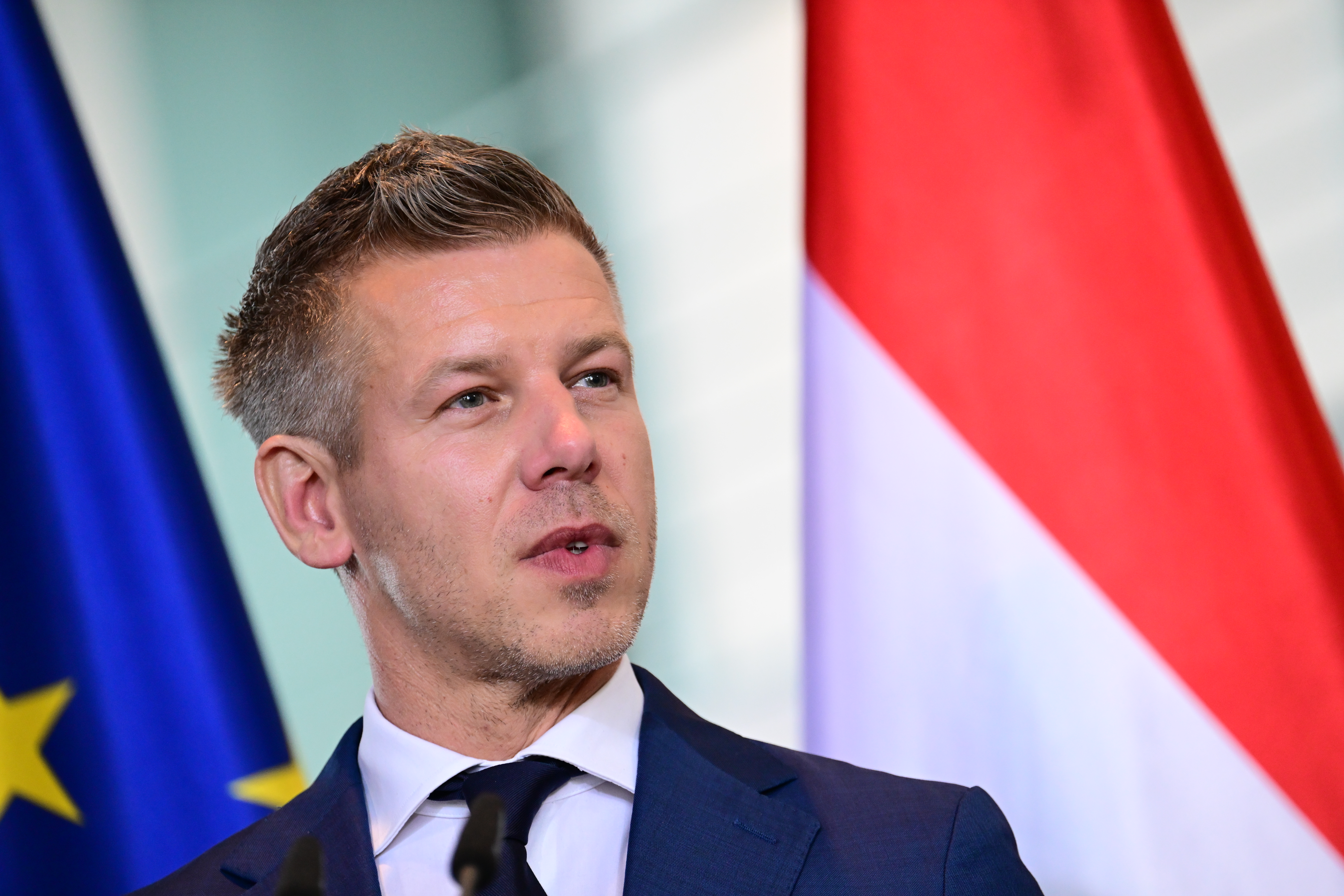
The system of controlled media collapsed like a house of cards immediately after election night. Everyone in charge knew that the game was up. When Magyar took over the government on May 9, his administration dried up the dubious funding channels supporting media outlets close to Orbán. In July, his people took control of the public broadcaster. For several days, it even stopped broadcasting news. A message appeared on the screens reading: "Public–service media must not lie. We apologize for having nevertheless done so for years!"
Magyar's centrist Tisza Party passed new media laws in parliament that envisage a model for public service broadcasting broadly based on the German system. This means that newsrooms are to be politically independent. A broadcasting council composed on a parity basis is to decide on senior management positions. Orbán's Fidesz party – now in opposition – would thus also appoint members to the council.
However, obstacles remain. Three of the council's nine members are to be appointed by professional organizations, but there is currently no consensus on which organizations these should be. Media scholar Gabor Polyak acknowledges that the Magyar government's intention is to establish a framework for serious public service media and independent media regulators. At the same time, he notes: "Much of it has not yet been fully thought through."
Among the survivors of the 16-year Orbán era are several independent, primarily internet-based media outlets, some of which wielded considerable influence. Under Orbán, they were almost completely cut off from official government information. Access to advertising revenue was largely closed to them. They secured their survival through subscriptions, paywalls, crowdfunding, and Hungary's 1% tax provision – which allows citizens to transfer 1% of their income tax to a nonprofit organization, including organizations supporting independent media.
One of these outlets is the weekly newspaper HVG, which also reaches its readership through its website, hvg.hu. At the HVG newsroom, located in a trendy startup complex at the foot of the Buda Hills, there is a lively atmosphere on a late-August day. Editor-in-chief Marton Gergely, 49, is optimistic. His media company survived the Orbán era: "Our brand has always been: distance from all political parties. We didn't have to fundamentally change our identity."
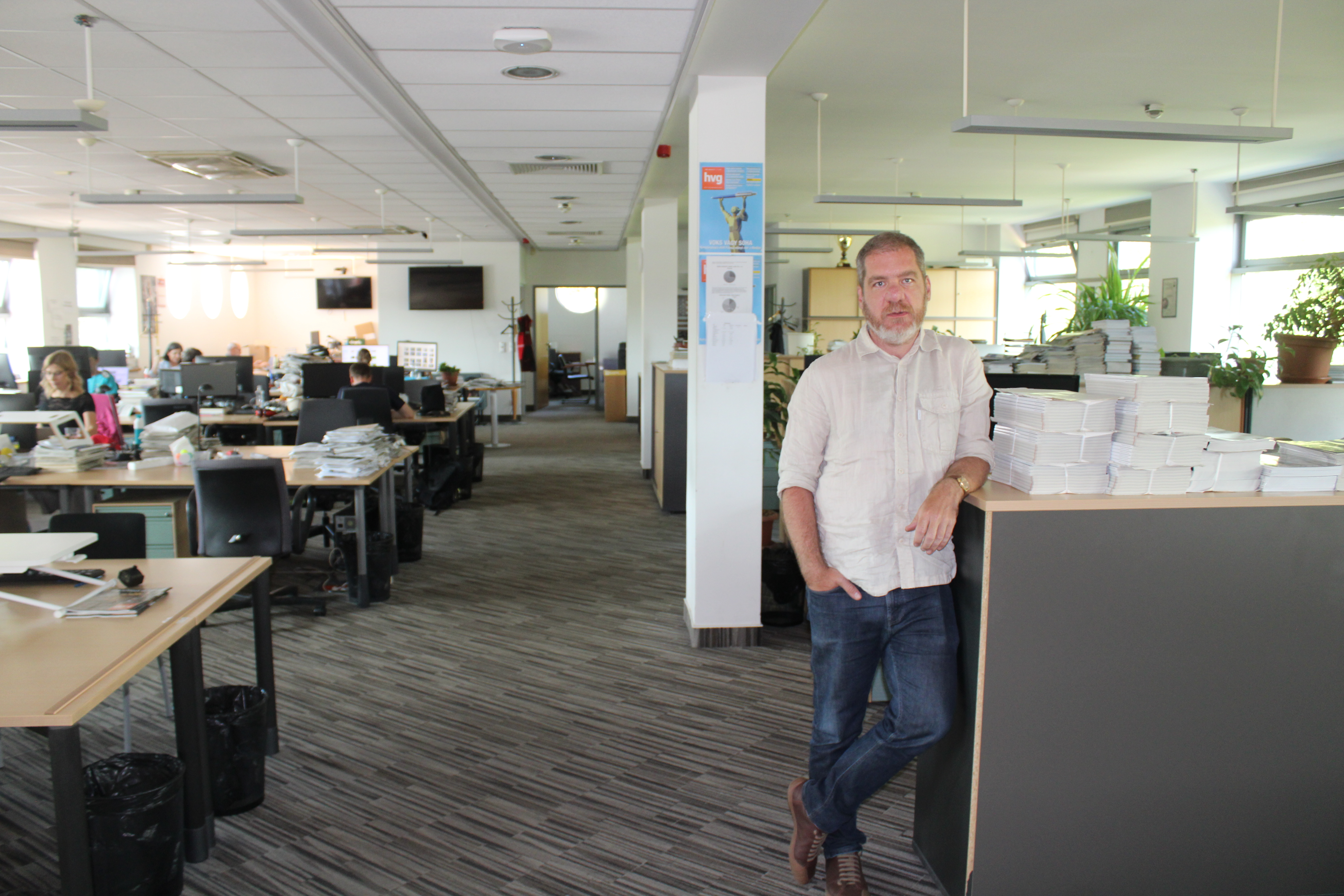
However, journalistic working methods will now change considerably. "Under the previous government, we independent journalists were constantly on the move, uncovering things that were supposed to be kept secret from the public. Government offices usually did not respond to our inquiries. We exposed contradictions and lies by government officials. We fought against the overwhelming power of propaganda – and that is now gone."
He compares the situation to that of divers working 200 meters below the surface, under immense water pressure. "And now we have reached the surface, where our actual habitat is. But that is dangerous too – if you do not adapt to the change in pressure, you put your life at risk." Gergely recalls one of his young editors, who spent his entire conscious childhood and adolescence living under Orbán. "At the first editorial meeting after the election, I asked my staff what would be different now. He simply replied: 'Everything I know'."
Márton Gulyás, 40, founder of the internet television channel Partizan, is also thinking hard about what the changed circumstances will require. When Magyar, then a minor Fidesz official and former husband of former Justice Minister Judit Varga, broke with the Orbán system seemingly out of nowhere in February 2024, he went to Gulyás's Partizan studio. The interview, in which he openly challenged the Orbán state, was viewed by three million internet users.
"Everything is opening up. For example, we can once again film in hospitals and talk to doctors. Under Orbán, they risked their professional livelihoods if they did that," Gulyas said in an interview at an art-house cinema in Budapest at the end of August. At the same time, there is considerable movement in the media employment market. Government agencies and the new public service broadcasters are recruiting staff away from the independent outlets.
"It's difficult to say where this will lead, but what is currently happening in the market is definitely desirable and right," Gulyas says. Asked about the future of Hungary's diverse independent media, he says: "Now everyone has to demonstrate their capacity for innovation. All the reflexes and working methods that were effective for 16 years have to be radically rethought."
At the Toldi Cinema, Gulyás presented his new project under the motto "Out to the Villages!" The emblematic former head of Partizan recently withdrew from the channel's operational management. As he explained in the presentation, he will move with a team to Penészlek in eastern Hungary, a godforsaken village near the Romanian border. He plans to live there for an indefinite period. An abandoned medical practice in need of renovation will serve as a base for him and his team.
He summarizes the project this way: "This is a place that represents a part of the country that otherwise receives little media attention. I am interested in representing realities of life that are completely absent from our public discourse yet are decisive for hundreds of thousands and millions of people in the country."
The sense of new beginnings among media professionals is taking many forms. It is not yet possible to foresee what will prevail – and what will be left behind.
Gregor Mayer, dpa