Riots in Bulgaria: Government withdraws draft budget
Tens of thousands of people took to the streets of the Bulgarian capital Sofia to protest against the current government, the proposed state budget and the lack of long overdue political lustration. The government has now reacted.
Sofia (dpa) - One month before the introduction of the euro, Bulgaria's pro-Western government has withdrawn its controversial draft budget for 2026 following a huge demonstration.
Prime Minister Rossen Scheljaskow saidthe government wanted to make concessions and submit new proposals by the end of the year.
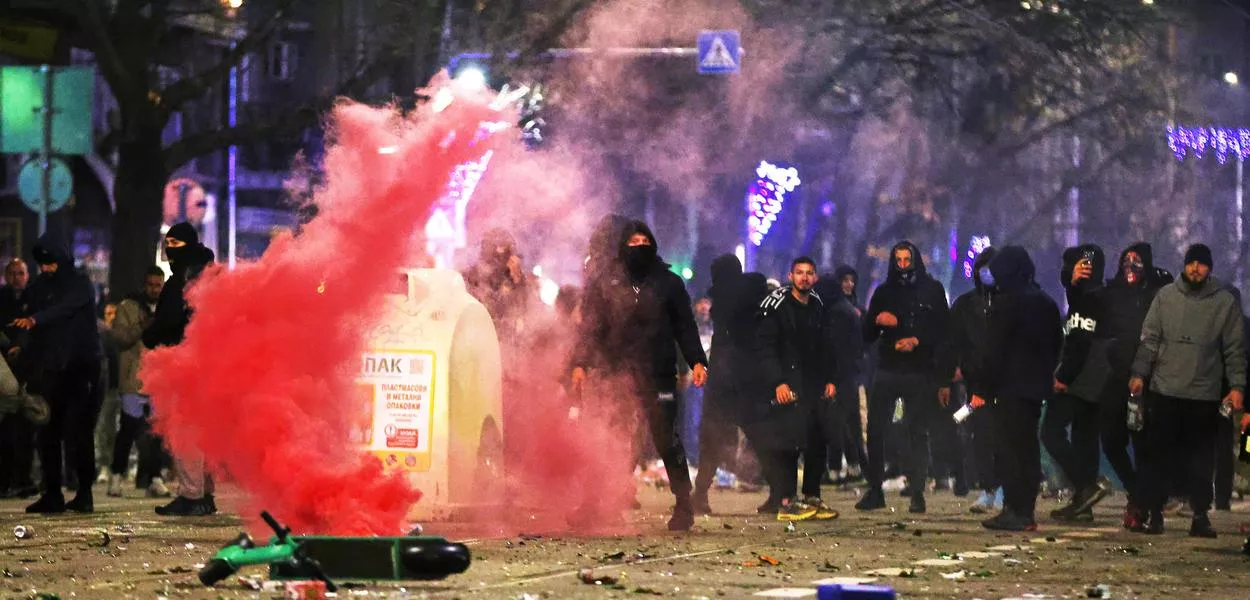
On Monday evening tens of thousands of people took to the streets in the capital Sofia. They were protesting against the budget, which had already been passed by parliament at its first reading.
One point of criticism is the planned increase in social security and pension contributions by two percentage points. They also complain that the budget leaves room for corruption. The demonstrators also demanded the resignation of the government.
Police fired tear gas
The demonstration, which began peacefully and attracted 50,000 participants according to the organisers, ended in riots at the headquarters of the ruling party during the night. Masked individuals threw firecrackers, bottles, cans and other objects at the police. The police responded with tear gas and pepper spray.
During the night of riots, Head of State Rumen Radev called for the government to resign. "There is only one way out: resignation and early elections," he wrote on Facebook.
The pro-Western opposition alliance PP-DB declared that if the government did not resign this week, there would be a vote of no confidence. Prime Minister Shelyaskov stated that, in view of the introduction of the euro on January 1, 2026, now was not the time for resignations.
Since January 2025, Bulgaria has been governed by a pro-Western coalition cabinet. It was formed as a compromise solution after the seventh parliamentary election in three and a half years, consisting of conservatives, socialists and populists.
This minority government is dependent in parliament on the support of a fourth party, the DPS, which is controversial among the opposition – the US and the UK have imposed sanctions on its party leader, Deljan Peewski, for corruption.