Loading article...
Trusted news agencies tracing tendencies of democratisation and autocratisation globally
Trusted news agencies tracing tendencies of democratisation and autocratisation globally
Loading article...
The opposition has narrowly won the general election in Sweden. Prime Minister Ulf Kristersson is accepting the consequences – and has submitted his resignation.
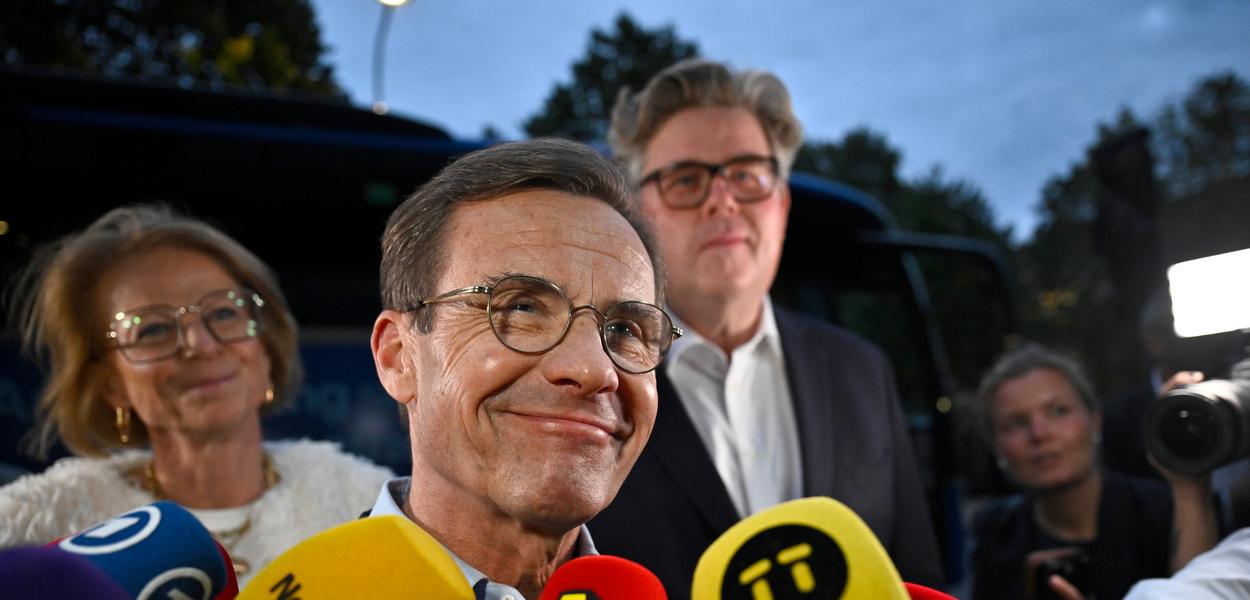
Stockholm (AP/dpa) - Following the left-leaning opposition’s victory in the Swedish general election, the Conservative Prime Minister Ulf Kristersson has resigned from office. Kristersson published his letter of resignation to the Speaker of Parliament on the news platform X.
The election result makes the formation of a new government complicated, “as the differing statements made by the parties prior to election day could hinder any conceivable government formation or coalition”, the letter stated.
Kristersson went on to write that “constructive openness on the part of the parties” was now required. “Discussions must be held with all parties to find solutions and create the conditions for a stable and effective government.” The Speaker of Parliament will now initiate the next steps towards forming a new government. “So that this work can begin immediately, I hereby request my dismissal as Prime Minister.”
In Sunday’s election, the four parties supporting Social Democrat Magdalena Andersson as head of government secured a narrow majority of 176 out of 349 seats in the Riksdag, according to a cmplete vote count. The Social Democrats emerged as the largest party with 28 per cent of the vote.
The outgoing government, comprising Kristersson’s Conservatives, Liberals and Christian Democrats, secured 173 seats in alliance with the right-wing populist Sweden Democrats. The provisional election result was only confirmed on Thursday, once the final postal votes had been counted. The final result is expected at the weekend.
Former Prime Minister Magdalena Andersson’s center-left Social Democrats finished as the biggest single party with 99 seats, despite losing eight seats compared with the last election in 2022.
Forming a government is likely to prove difficult for Andersson. Potential coalition partners for her Social Democrats include the Left Party and the Greens, as well as the liberal Centre Party. The latter, however, had previously stated that it did not wish to govern with the Left Party. A minority government is also a possibility.
Kristersson has led Sweden with a three-party, center-right coalition. The parliamentary majority relied on outside support from the Sweden Democrats, an anti-immigration party that has far-right roots but has moved toward the political mainstream.