Loading article...
Trusted news agencies tracing tendencies of democratisation and autocratisation globally

Trusted news agencies tracing tendencies of democratisation and autocratisation globally
Loading article...
Mexico is a dangerous country for journalists. Violent criminal cartels are a serious threat, but not the only one. Politicians right up to the very top are also listing journalists seen as awkward. And judicial harassment is a new tool being employed to silence reporters.
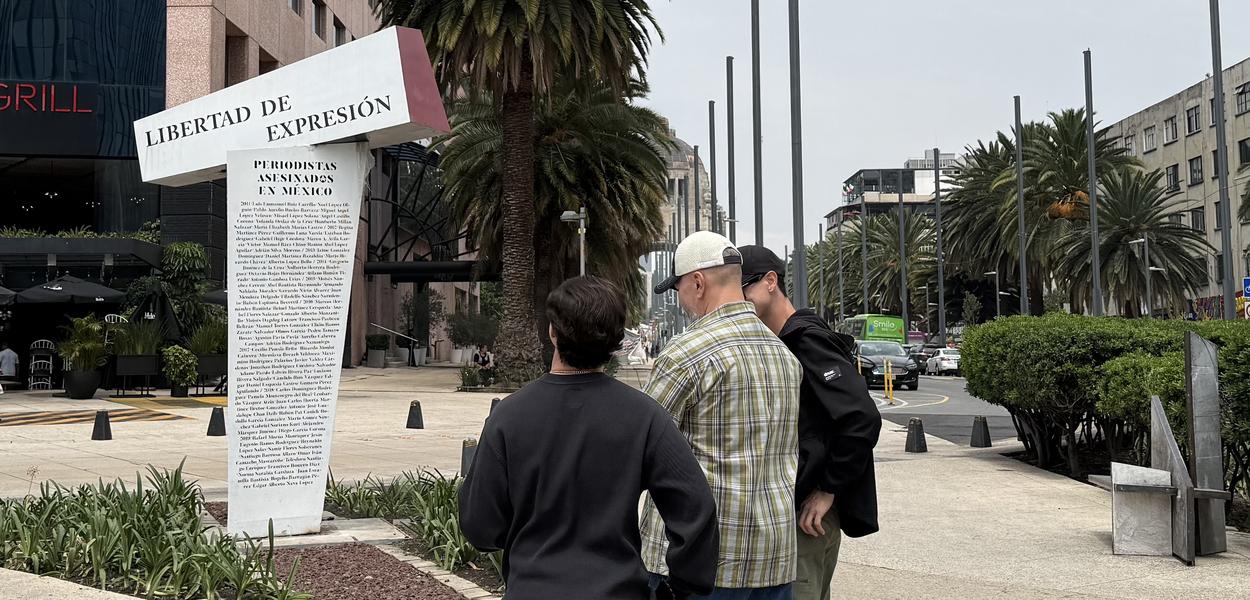
Mexico City (DNA) – For years, Mexico has consistently ranked among the world's most dangerous countries for the press. While drug cartels that defy the state with their violence are certainly a threat, in reality it is not only criminal gangs that prey on the press in this Latin American country.
In many cases, the deadly mix includes other actors - or several at once: organized crime, corrupt police, and politics. Anyone could be behind a murder, from a cartel leader upset by a news story, to a small town mayor angry over criticism of potholes in the streets, or a police chief exposed for corruption.
On June 2, it was barely 6:00 am when several armed men arrived at the home of journalist Roxana Guzmán Ramírez, editor-in-chief of a digital news outlet in the Mexican state of Veracruz, to kidnap her.
A video recorded from inside the house, which circulated on social media, shows a hooded man dressed in black striking the door with a sledgehammer to break the lock, while another thrusts a long gun through the broken glass. They then manage to gain entry.
The journalist from the town of Nanchital was beaten and forced into a car, according to statements from family members reported by the press. She was found dead and burned on a ranch a month later.
Nine people were arrested in connection with the murder, including a former bodyguard of a mayor, members of a criminal group, and police officers. The mayor is under investigation as the alleged mastermind, but he has denied any involvement in the murder.
In the first eight months of this year, eight journalists have been killed in Mexico - an average of one per month - according to Reporters Without Borders (RSF). The figure is higher than in any other part of the world, even in war zones such as Gaza.
Over the past 25 years, more than 180 journalists have been killed in the country, according to RSF figures.
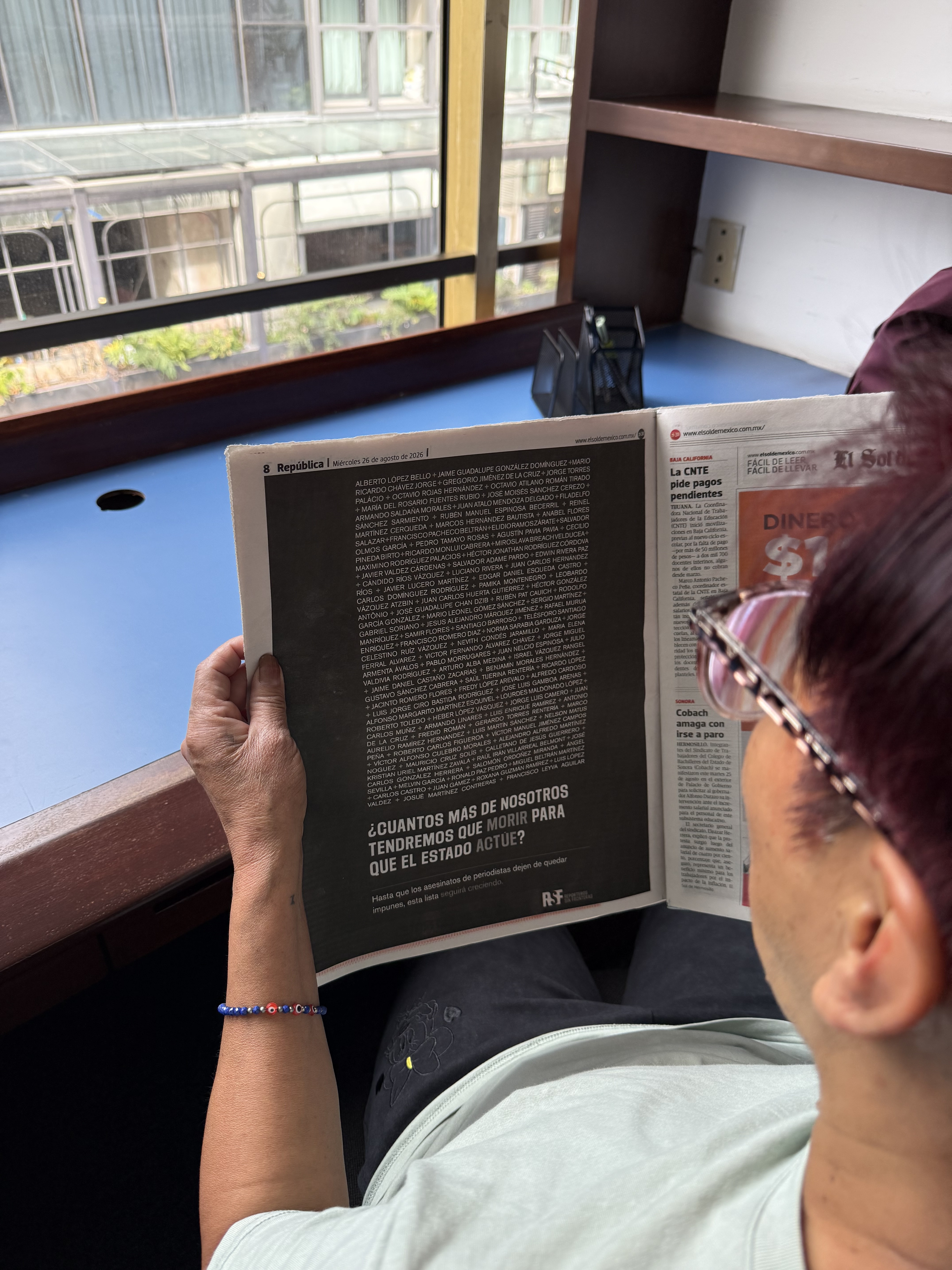
"As long as impunity prevails, this trend will continue to grow," says Balbina Flores, RSF's representative in Mexico, in an interview with German news agency dpa. Flores points out that in 98% of cases, no conviction is secured, and often only the perpetrators - those who pulled the trigger - are brought to justice, not those who ordered the killing.
RSF recently launched a campaign calling for a national emergency plan to address this crisis.
In addition to some journalists who were known nationally, such as the prominent reporter Javier Valdez, who was murdered in 2017 by the Sinaloa Cartel, many of the reporters who have been killed in recent years in Mexico were reporters from small communities.
They reported on local issues through news pages they created themselves on Facebook and other social media platforms. Some juggled their reporting work with other jobs to make ends meet.
"In Mexico, the burden of reporting on events in local communities falls on digital journalists who live there, who face significant vulnerabilities in a context of extreme violence," the RSF representative says. "It bothers the perpetrators when these journalists document acts of daily violence in their communities, directly call out a mayor or a police department, or expose acts of corruption or environmental damage. These local voices that report on what's happening are a thorn in their side," she says.
This climate of threats and impunity also exists in a context in which Mexican journalists are constantly being called into question by those in the highest echelons of power.
The most recent case involved the publication of a list containing the names of more than 50 critical journalists and columnists at a government press conference titled "Right of Reply," which is led each week by the Presidency's legal advisor. There, reporters were singled out as part of a "digital ecosystem" designed to attack the government of leftist President Claudia Sheinbaum.
Those named interpreted this action as an act of intimidation by those in power - something the head of state has denied. "There was never any talk of censorship or a list identifying these as 'bad journalists' or anything of the sort, but rather of a scheme that exists and is real, one involving paid social media accounts that often pick up on these journalists' stories to amplify them. That's what was said," Sheinbaum stated. In Mexico, the president asserted, there is freedom of expression.
Veteran journalist Joaquín López Dóriga, one of those who appeared on the government's recent list, noted that the previous president, Andrés Manuel López Obrador (2018–2024) - Sheinbaum's political mentor - mentioned him negatively 316 times in his daily press conferences over the course of six years.
These kinds of actions are part of a process in which "criticism must be demolished, discredited, undermined, and annihilated," Héctor de Mauleón, a columnist for the newspaper "El Universal," tells dpa. "A climate of hostility is created in which the media are the enemy. They are no longer critics of a government, but enemies of a country," he says.
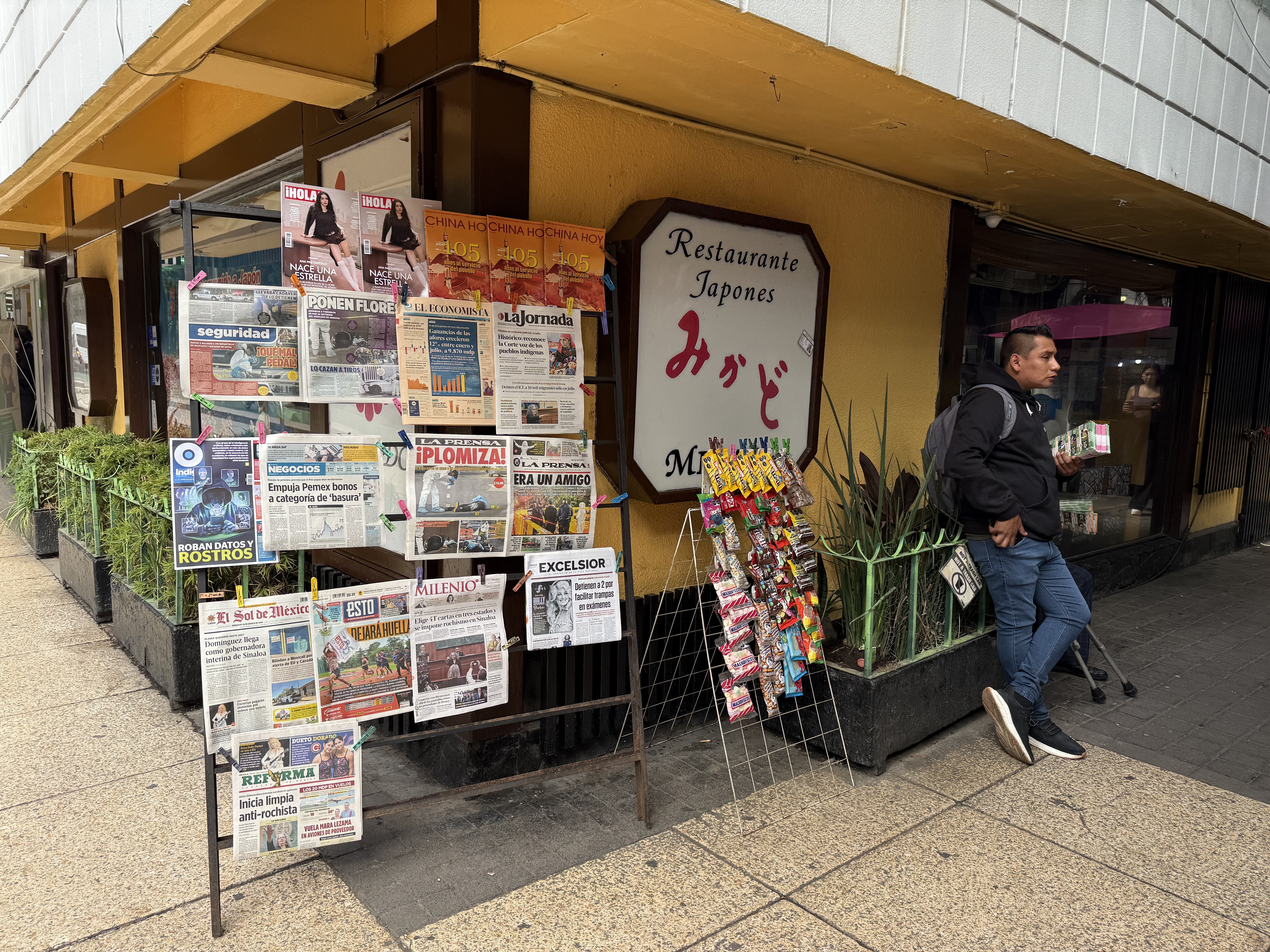
The harassment, he notes, creates "zones of silence" and self-censorship in many regions and extends to constant attacks on social media. And society sees this as something that doesn't concern it.
De Mauleón also appeared on the recent government list. For years he has been the victim of threats, likely from criminal gangs he has exposed in his writings. On one occasion, a threatening video surfaced showing a photo of the journalist affixed to a metal silhouette at a shooting range, which had been shot six times with a firearm.
New tools are currently being used in Mexico against the press, De Mauleón says. Among them are lawsuits for alleged moral damages or for "gender-based political violence," when criticism is directed at a female politician, abusing a regulation actually designed for another purpose. "They force you to apologize, to take down posts, and to never mention a person again," the journalist explains.
According to Article 19, an organization that defends freedom of expression, in 17 of Mexico's 32 states, 51 journalists and media outlets are facing legal proceedings, mostly due to lawsuits filed by public officials.
"Judicial harassment has become a new form of censorship in Mexico. While physical and digital violence is still part of the daily lives of journalists and media outlets in the country, there is now frequent and intensive use of lawsuits, complaints, and injunctions to silence journalists and media outlets," the organization noted in its report "Laws as a Mechanism of Censorship."
If this trend continues, Article 19 warned, the space for critical journalism will shrink even further in Mexico.
Andrea Sosa Cabrios, dpa