
Algerian court upholds 7-year sentence for French journalist Gleizes
French journalist Christophe Gleizes remains in prison in Algeria following the confirmation of his verdict on appeal. The sports journalist was sentenced for "glorifying terrorism" after interviewing the head of a football team.
Tizi Ouzo/Paris (AP/AFP) - An Algerian appeals court upheld Wednesday a seven-year prison sentence for a French sports writer convicted of “glorifying terrorism,” quashing hopes for an early release.
Christophe Gleizes was sentenced six months ago over an interview with a soccer official accused of ties to a banned separatist movement. He was convicted of violating Algeria’s anti-terrorism laws and possessing publications intended for propaganda, in a case lambasted by rights groups and French media.
France "deeply regrets" the seven-year prison sentence upheld on appeal in Algeria against French journalist Christophe Gleizes, and "calls for his release," the French Foreign Ministry spokesperson said. "We call for his release and hope for a favourable outcome so that he can quickly be reunited with his loved ones,’ the spokesperson added.
France "deplores the fact that (the journalist's) full cooperation with the Algerian authorities and the explanations provided by his defence were not enough to change the verdict" and "reiterates its commitment to press freedom throughout the world," the ministry spokesman continued.
Presidential pardon now needed
In Tizi Ouzou's Court of Appeals, Gleizes pleaded guilty, acknowledged “many journalistic mistakes,” and asked the prosecutor for forgiveness and clemency so he could return to his family in France, his Algerian lawyer, Amirouche Bakouri, told reporters.
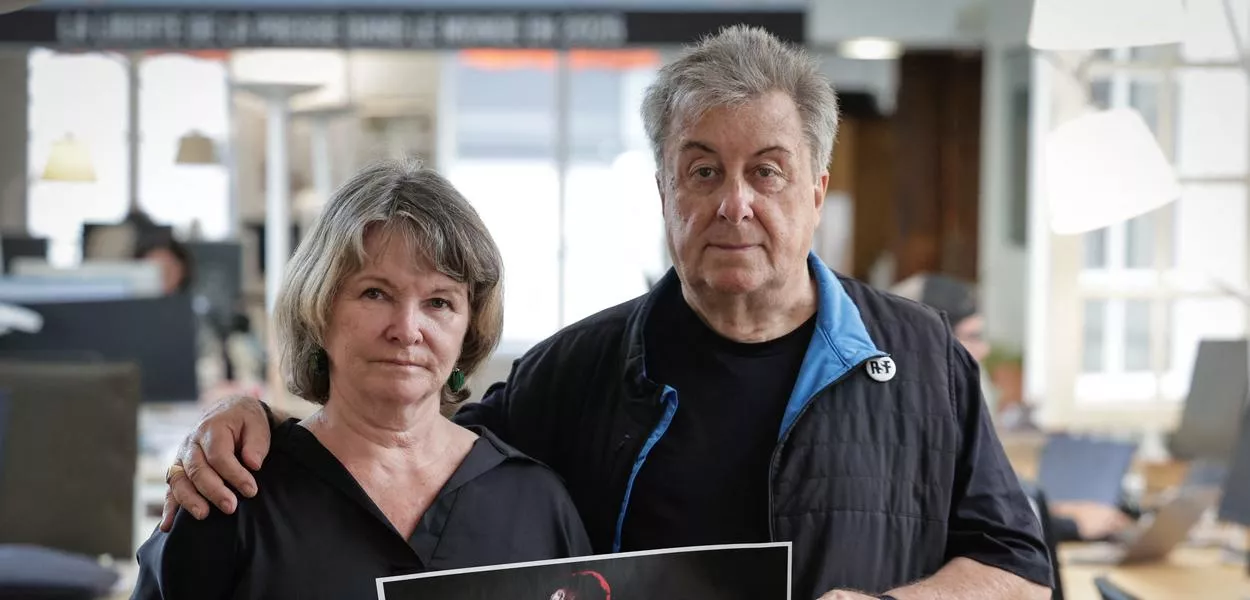
The verdict caused consternation with family present in the courtroom. His brother said he was "stunned". In Algeria, his parents said they were "devastated".
The NGO Reporters Without Borders (RSF) on Wednesday denounced an "absurd decision" by the Algerian judiciary. Gleizes, a 36-year-old freelancer, is the only French journalist imprisoned worldwide, according to French media.
Improving French-Algerian relations and last month’s release of French-Algerian novelist Boualem Sansal buoyed hopes for Gleizes’ appeal. Now, a pardon from Algerian President Abdelmadjid Tebboune is the only way the sports writer can be released.
Wrong visa
Gleizes was arrested and placed under judicial supervision in 2024. Authorities say he entered the country on a tourist visa while reporting on JS Kabylie, Algeria’s most historically dominant football team, whose successes are deeply enmeshed in the movement to win cultural recognition for the Amazigh minority in the Kabylia region.
The journalist apologised in court on Wednesday, acknowledging that he should have applied for a journalist's visa rather than a tourist visa before travelling to Algeria to report on the story.
The charges against Gleizes stemmed from contact he had with the head of a football club who was also a member of a political movement that Algeria designated as a terrorist group four years ago, Reporters Without Borders said at the time.
The region has for decades been an epicenter of rebellion in Algeria. Authorities have, in recent years, clamped down on the region’s Movement for the Self-Determination of Kabylia, the separatist group of which the then-head of JS Kabylie was a member.
Broader crackdown on freedom of the press
Gleizes' sentencing also came days after the arrest of columnist Saad Bouakba, a prominent Algerian journalist now in pre-trial detention.
Bouakba, 79, is accused of “defamation and insulting the symbols of the revolution” after he accused, in a podcast, one of Algeria’s first presidents of misusing funds collected for Algeria's revolution.
Though some leading media figures have been recently released in Algeria, outlets critical of authorities remain shuttered, journalists are still prosecuted, and foreign reporters are rarely granted visas. Rights organisations have long accused the military-led North African country of using anti-terrorism laws to target political speech.